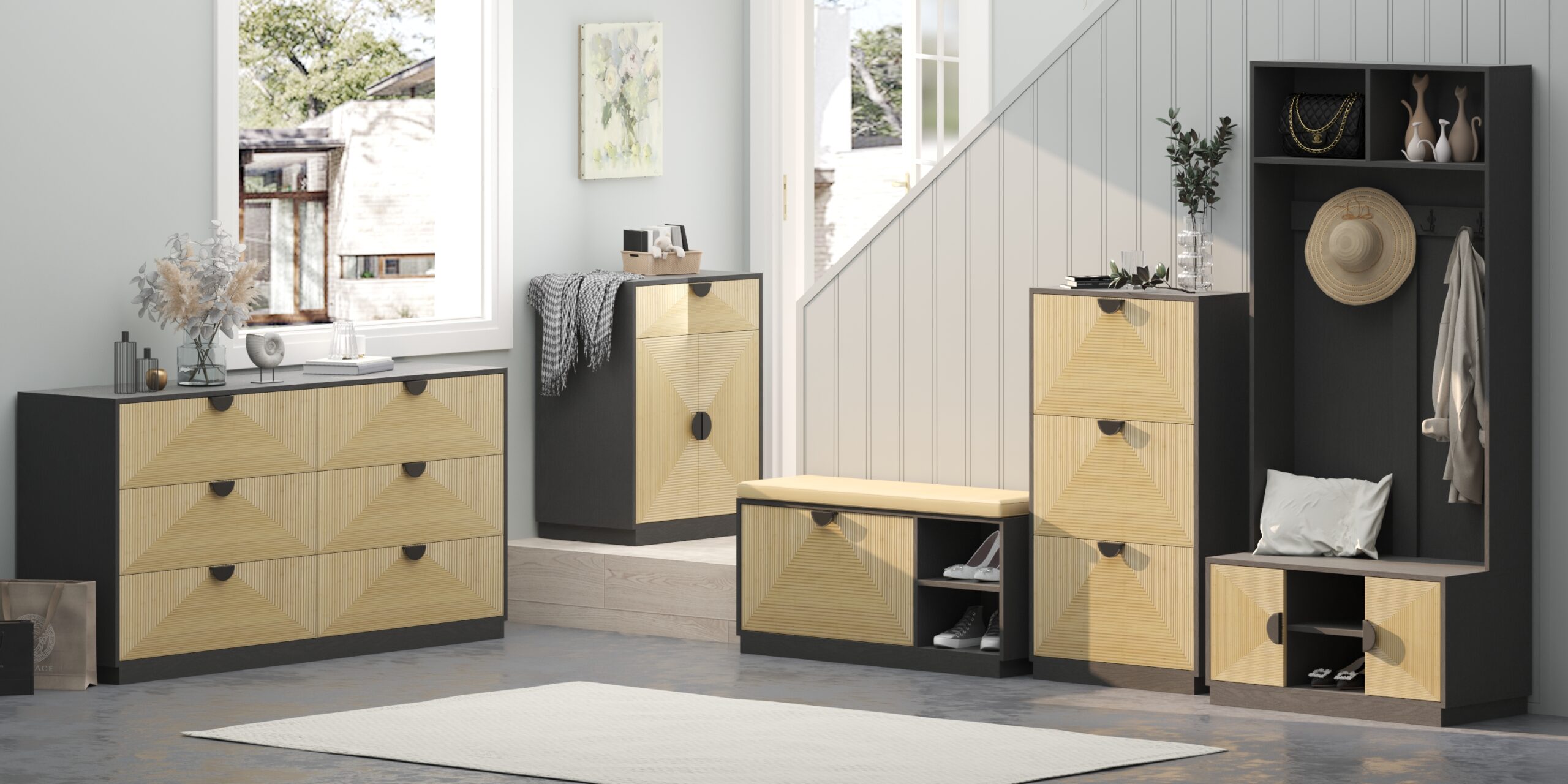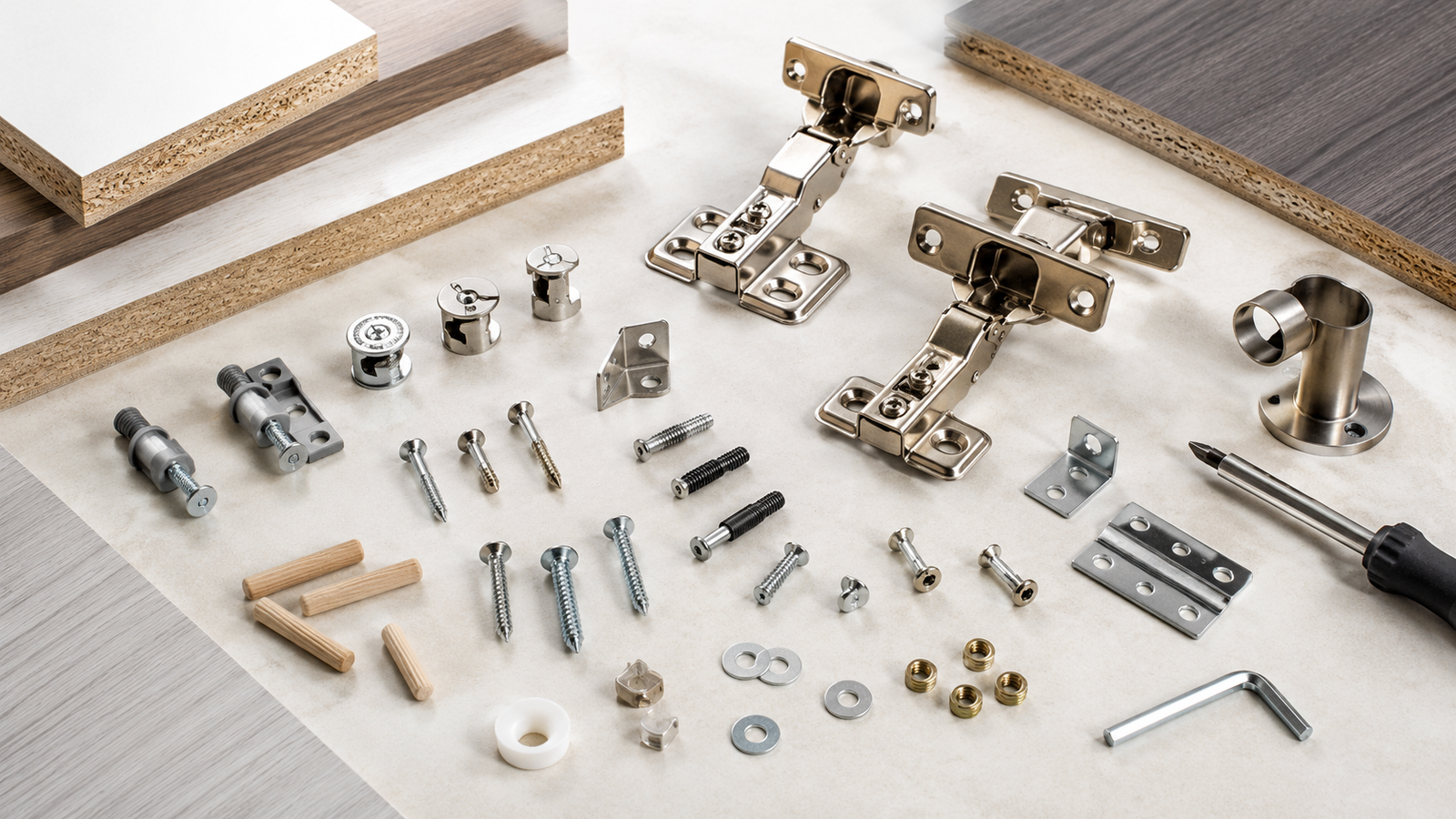
Furniture hardware refers to the small but essential components used to connect, support, open, close and reinforce furniture structures. In panel furniture manufacturing, common hardware includes screws, nuts, washers, cam connectors, hinges, dowels, shelf supports, wardrobe rail supports and glass holders. Choosing the right hardware helps improve furniture strength, assembly efficiency, safety and long-term durability.
For importers, wholesalers, retailers and e-commerce sellers, hardware quality is an important factor when evaluating flat pack furniture suppliers.
Why Furniture Hardware Matters
When buyers evaluate panel furniture, they often focus on material, color, size and design. However, furniture hardware plays an equally important role in product quality.
Good hardware can help furniture:
- Stay stable after assembly
- Improve load-bearing performance
- Reduce shaking and loosening
- Make doors and drawers work smoothly
- Improve customer assembly experience
- Lower after-sales complaints
For flat pack furniture, hardware is especially important because most products are assembled by end users. If the screws, connectors or hinges are not suitable, customers may face problems such as misalignment, loose panels, unstable structures or difficult installation.
Common Furniture Hardware Materials
Furniture hardware can be made from different materials depending on the product function and cost requirement.
Common materials include:
- Iron
- Copper
- Aluminum alloy
- Zinc alloy
- Stainless steel
- Rubber
- Plastic
For most panel furniture products, metal hardware is used for structural connection and load-bearing parts, while plastic and rubber parts are often used for protection, cushioning or decorative purposes.
For example, zinc alloy is commonly used for cam connectors, stainless steel is suitable for corrosion-resistant parts, and plastic fittings can be used for caps, glides and protective components.
Furniture Screws and Bolts
Screws and bolts are basic fastening components used to connect furniture parts together. In furniture manufacturing, different screw types are selected according to the material, panel thickness and assembly method.
Wood Screws
Wood screws usually have a pointed tip and larger thread spacing. They are commonly used for connecting wood panels, MDF, particle board and plastic components.
They are suitable for:
- Cabinet bodies
- Shelves
- Back panels
- Wooden frames
- Flat pack furniture assembly
Machine Screws and Bolts
Machine screws or bolts normally have a flat tip and smaller, more even threads. They are often used with nuts or metal parts.
They are suitable for:
- Metal frames
- Adjustable furniture parts
- Reinforced structural connections
- Furniture with repeated assembly requirements
Choosing the right screw length and diameter is important. If the screw is too short, the connection may not be strong enough. If it is too long, it may damage the panel or come through the surface.
Screw Head Types
Furniture screws can also be classified by head design and drive type.
Common drive types include:
- Slotted drive
- Phillips drive
- Hex socket drive
- One-way drive
Common head shapes include:
- Flat head
- Round head
- Large flat head
- Hex head
For flat pack furniture, hex socket screws are widely used because they are easy to install with an Allen key and provide better torque control. Flat head screws are often used when the screw head needs to sit flush with the panel surface.
Nuts, Washers and Fastening Accessories
Nuts and washers are small components, but they help improve connection strength and stability.
Common Nut Types
Common furniture nuts include:
- Hex nuts
- Flange nuts
- Lock nuts
- Cap nuts
- Barrel nuts
- Rivet nuts
- Insert nuts
- T-nuts
- Nylon nuts
Different nuts are used for different structures. For example, insert nuts are useful when a product needs stronger repeated assembly, while lock nuts can help reduce loosening caused by movement or vibration.
Common Washer Types
Washers are used to distribute pressure and protect the furniture surface. Common types include:
- Flat washers
- Spring washers
- Plastic washers
- Insulating washers
In furniture assembly, washers can reduce surface damage, improve fastening stability and make connections more secure.
Furniture Connectors for Flat Pack Design
Connectors are key components in modern RTA and flat pack furniture. They allow furniture panels to be assembled efficiently while keeping the structure strong.
Common furniture connectors include:
- L-shaped brackets
- T-shaped plates
- Straight plates
- Cam lock connectors
- Two-in-one connectors
- Three-in-one connectors
- Bed corner brackets
- Hanging plates
Among these, cam lock connectors and three-in-one connectors are very common in flat pack panel furniture. They help create a clean appearance because the connection is mostly hidden inside the panel.
This type of hardware is often used in:
- Wardrobes
- TV stands
- Sideboards
- Bookcases
- Shoe cabinets
- Bed frames
- Storage cabinets
For B2B buyers, connector quality affects both product stability and customer assembly experience.
Hinges and Soft-Close Hinges
Hinges are used for doors, folding panels and moving parts. In panel furniture, hinges determine how smoothly the cabinet doors open and close.
Common hinge types include:
- Standard hinges
- Two-fold hinges
- Three-fold hinges
- Concealed hinges
- Hydraulic soft-close hinges
Hydraulic soft-close hinges are especially popular in modern furniture because they reduce noise and prevent doors from slamming. They also improve the perceived quality of the product.
Soft-close hinges are commonly used in:
- Wardrobes
- Sideboards
- Shoe cabinets
- Kitchen cabinets
- Bathroom cabinets
- Accent cabinets
For mid-range and higher-end markets, soft-close hardware is often an important selling point.
Wooden Dowels and Support Fittings
Wooden dowels are widely used in panel furniture for positioning and reinforcement. They help align panels during assembly and improve structural stability.
Common support fittings include:
- Wooden dowels
- Wardrobe rail supports
- Shelf supports
- Glass supports
- Hanging plates
Shelf supports are used to hold adjustable shelves inside cabinets and bookcases. Wardrobe rail supports are used to hold clothing rods. Glass supports are used when furniture includes glass shelves or glass panels.
These small fittings may look simple, but they directly affect product safety and daily use.
Surface Treatment of Furniture Hardware
Hardware surface treatment helps improve appearance, corrosion resistance and durability.
Common surface treatments include:
- Zinc plating
- Chrome plating
- Nickel plating
- Painting
- Powder coating
- Sandblasting
- Natural finish
For visible hardware, surface finish also affects furniture style. Matte black, brushed nickel, chrome and brass finishes are commonly used in modern furniture design.
For hidden hardware, corrosion resistance and strength are usually more important than appearance.
How to Choose the Right Hardware for Panel Furniture
When selecting furniture hardware, buyers should consider:
- Panel Material
MDF, particle board and plywood may require different screws or connectors. - Panel Thickness
Hardware length and diameter should match the board thickness. - Product Function
A wardrobe, bed frame and bookcase have different load-bearing requirements. - Assembly Method
Flat pack products need user-friendly hardware and clear instructions. - Target Market
E-commerce products may require stronger packaging and more reliable fittings to reduce after-sales issues. - Product Positioning
Budget furniture may use standard hardware, while premium collections may require soft-close hinges, stronger connectors and upgraded finishes.
Why Hardware Quality Is Important for Importers
For furniture importers and retailers, hardware quality affects more than just assembly. It also influences product reviews, return rates and brand reputation.
Poor hardware may cause:
- Difficult assembly
- Loose panels
- Door misalignment
- Weak structures
- Customer complaints
- Higher replacement part costs
Reliable hardware can help improve:
- Product stability
- Assembly efficiency
- Customer satisfaction
- Long-term durability
- Brand trust
This is why professional panel furniture suppliers carefully match hardware with product structure during development.
Top Class Furniture Hardware Solutions
At Top Class Furniture, we manufacture modern panel furniture for importers, wholesalers, retailers and e-commerce sellers. Our team selects suitable hardware according to product design, material, structure and target market.
We can support:
- OEM and ODM hardware matching
- Flat pack furniture hardware kits
- Soft-close hinge options
- Customized connector solutions
- Shelf support and wardrobe rail support options
- User-friendly assembly instructions
- Mail order packaging for e-commerce products
Whether you need TV stands, wardrobes, sideboards, bookcases, shoe cabinets or bedroom furniture, we can help you choose suitable hardware for better stability, easier assembly and stronger market competitiveness.
Conclusion
Furniture hardware may be small, but it has a major impact on product quality. Screws, nuts, washers, connectors, hinges, dowels and support fittings all work together to create stable, practical and durable furniture.
For buyers sourcing panel furniture, understanding hardware details can help improve product selection, reduce after-sales risks and build better furniture collections for the market.
If you are looking for a reliable panel furniture manufacturer in China, Top Class Furniture offers customized flat pack furniture solutions with suitable materials, hardware and packaging for global buyers.
FAQ
What is furniture hardware?
Furniture hardware refers to the fittings and accessories used to assemble, connect, support and operate furniture. Common examples include screws, hinges, connectors, nuts, washers, dowels and shelf supports.
What hardware is commonly used in flat pack furniture?
Flat pack furniture commonly uses cam lock connectors, screws, wooden dowels, hinges, shelf supports, brackets and washers.
Why are soft-close hinges important?
Soft-close hinges prevent cabinet doors from slamming. They improve user experience, reduce noise and make furniture feel more premium.
What is a three-in-one connector?
A three-in-one connector is a common flat pack furniture fitting that usually includes a cam lock, connecting bolt and plastic or metal insert. It helps connect furniture panels securely while keeping the appearance clean.
How do I choose furniture hardware?
Choose hardware based on the panel material, board thickness, product function, load-bearing requirement, assembly method and target market.